Suella Braverman: The Journey of a Controversial Conservative Voice
Introduction
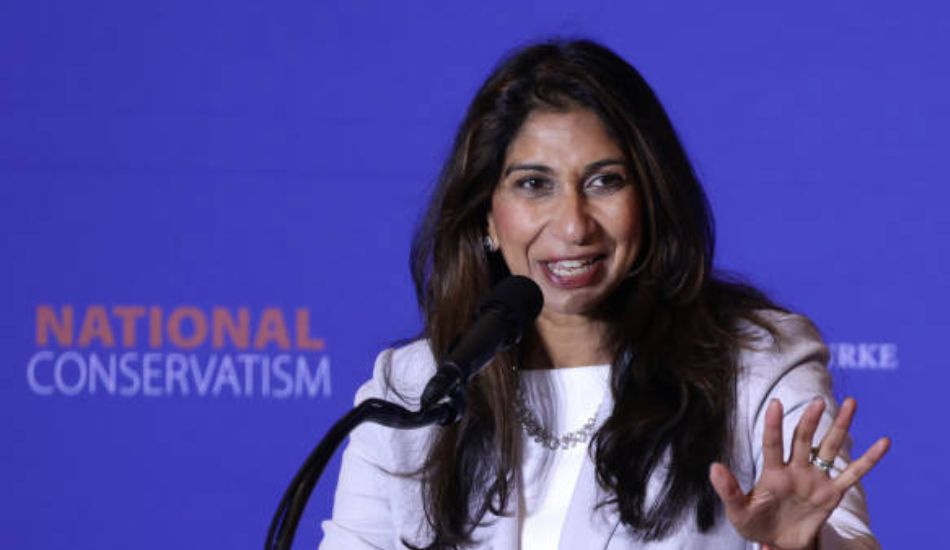
In the ever-evolving landscape of British politics, few figures have garnered as much attention in recent years as Suella Braverman. Known for her strong opinions on immigration, legal reform, and national identity, Braverman has carved out a space as one of the most ideologically driven members of the Conservative Party. From her multicultural background and elite education to her fast-paced rise through the ranks of UK politics, her story is one of ambition, controversy, and conviction.
This article explores Suella Braverman’s age and birthday, ethnic and religious background, career path, personal life, and her role in shaping Conservative politics in Britain.
Who is Suella Braverman?
Sue-Ellen Cassiana Braverman, commonly known as Suella Braverman, is a British Conservative politician and barrister. She was born on 3 April 1980 in Harrow, London. As of 2025, she is 45 years old. Braverman has served as the Member of Parliament (MP) for Fareham since 2015 and has held high-ranking government positions, including Home Secretary, Attorney General for England and Wales, and Chair of the European Research Group.
Her outspoken views on immigration, national security, and British identity have made her both a prominent political figure and a subject of national debate.
Early Life and Education
Suella Braverman was raised in Wembley, North-West London. Her upbringing was influenced by her parents’ strong work ethic and immigrant backgrounds. She earned a scholarship to attend Heathfield School in Pinner before studying law at Queens’ College, Cambridge. During her time at university, she chaired the Cambridge University Conservative Association, signaling early political ambition.
After Cambridge, Braverman pursued a Master of Laws (LLM) in European and French law at the Panthéon-Sorbonne University in Paris and later qualified as an attorney in New York. Her impressive academic background paved the way for a career in both law and politics.
Ethnicity, Origin, and Religion
Braverman’s heritage is diverse and central to her identity:
Her mother, Uma Mootien-Pillay, is a Tamil Hindu from Mauritius. She worked for the NHS for over four decades and served as a local councillor.
Her father, Christie Fernandes, is of Goan Christian descent and emigrated from Kenya. He worked for a housing association in the UK.
These multicultural roots—Mauritian, Indian, and Kenyan—have often placed Braverman at the intersection of identity politics in Britain.
Despite her mixed heritage, Braverman aligns herself with British traditionalism. She practices Buddhism and is a member of the Triratna Buddhist Community, having taken her parliamentary oath of office on the sacred Buddhist text Dhammapada.
Legal Career and Entry into Politics
Before stepping fully into politics, Braverman built a successful legal career as a barrister specializing in public law, judicial review, immigration, and constitutional matters. She was appointed to the Attorney General’s Panel of Counsel in 2010, allowing her to represent government departments in court.
Her political ambitions solidified when she was elected MP for Fareham in 2015. Braverman was quick to align herself with the Eurosceptic wing of the Conservative Party, becoming a leading figure in the European Research Group (ERG), a pro-Brexit faction.
Political Career and Previous Offices
Suella Braverman’s rise within the Conservative Party has been rapid and marked by her unflinching views on controversial topics:
1. Parliamentary Under-Secretary for Exiting the European Union (2018)
Braverman was appointed in the heat of Brexit negotiations. She was responsible for legislation related to the UK’s departure from the EU but resigned in protest over Theresa May’s withdrawal agreement, claiming it did not deliver the promised Brexit.
2. Chair of the European Research Group (ERG) (2017–2018)
Braverman led the influential ERG, pushing for a hard Brexit and minimizing EU influence on British sovereignty.
3. Attorney General (2020–2022)
Under Boris Johnson, she became the UK’s chief legal advisor. During her tenure, she defended controversial government policies, including efforts to override the Northern Ireland Protocol and deport migrants to Rwanda.
4. Home Secretary (2022–2023)
First appointed by Liz Truss and then reinstated by Rishi Sunak, Braverman’s stint as Home Secretary was perhaps her most high-profile role. She introduced and supported hardline immigration policies and was vocal about what she termed the “toxic left” culture and “woke” ideologies.
She was eventually dismissed in late 2023 following a series of public disagreements with Prime Minister Rishi Sunak, particularly around policing and immigration policies.
Policy Stances and Controversies
Braverman is best known for her hard-right stance on immigration, national security, and British cultural values. Her tenure has included:
Support for the Rwanda deportation plan for asylum seekers.
Crackdowns on illegal migration and protest policing.
Public criticism of “woke” culture, identity politics, and transgender rights policies in schools.
Supporters see her as a defender of law and order and traditional British values. Critics label her rhetoric as inflammatory, divisive, and out of step with the multicultural Britain she herself represents.
Personal Life: Husband and Children
In 2018, Braverman married Rael Braverman, a Mercedes-Benz manager of Jewish South African heritage. Their wedding was held in the House of Commons, a symbolic gesture of her political life blending with the personal.
The couple have two children:
George (born in 2019)
Gabriella (born in 2021)
Braverman returned to work shortly after both births, frequently emphasizing the challenges working mothers face in high-pressure careers.
Parents and Family Influence
Her mother, Uma, had a significant influence on her political views. As an immigrant and NHS nurse turned local councillor, Uma instilled in Braverman a deep respect for public service, personal responsibility, and national pride. Her father, Christie, though less politically visible, provided economic stability and encouragement for Suella’s academic pursuits.
Braverman has often spoken about how her upbringing influenced her views on immigration—seeing it as a privilege, not a right—and the importance of integration into British society.
Where Is Suella Braverman Today?
As of mid-2025, Braverman remains an active MP and a prominent backbencher. Though no longer in the cabinet, she continues to speak at party conferences, think tanks, and right-wing media outlets, maintaining her political brand and possibly positioning herself for future leadership.
Many political analysts speculate that she’s laying the groundwork for a leadership bid in the event of a post-election Conservative leadership contest.
Legacy and Public Perception
Suella Braverman’s legacy is yet to be fully written. She has both passionate supporters and vocal detractors. Her admirers praise her fearlessness and ideological clarity, while critics argue that her policies undermine the UK’s inclusive values.
Despite the polarizing nature of her career, what’s clear is that Braverman represents a bold—and for some, uncomfortable—strain of modern conservatism that challenges the direction of Britain’s center-right politics.
Final Thoughts
Suella Braverman’s life and career reflect the complexities of modern British politics: a woman of color advocating for stricter immigration laws; a Buddhist promoting traditional British values; and a legal mind who challenges the very legal institutions she once served. Whether loved or loathed, her voice is one that cannot be ignored.
For more insightful articles and deep-dive profiles like this one, be sure to visit thejangoo.com, your hub for informed analysis on political figures, world events, and social commentary.